
The Fulfillment I Found in Repairing My Old Umbrella: Mottainai Spirit

I have an umbrella that I bought about 20 years ago for ¥1,500 (around $10).
Recently, the fabric came loose from one of the rib tips, but the rest of the umbrella was still in perfect condition. I felt that it would be mottainai to throw it away. Mottainai is a Japanese word that expresses regret over wasting something valuable. So, I decided to take the umbrella to a repair shop.
I would like to share the entire story of getting my umbrella repaired—and how the experience ultimately gave me a sense of fulfillment.
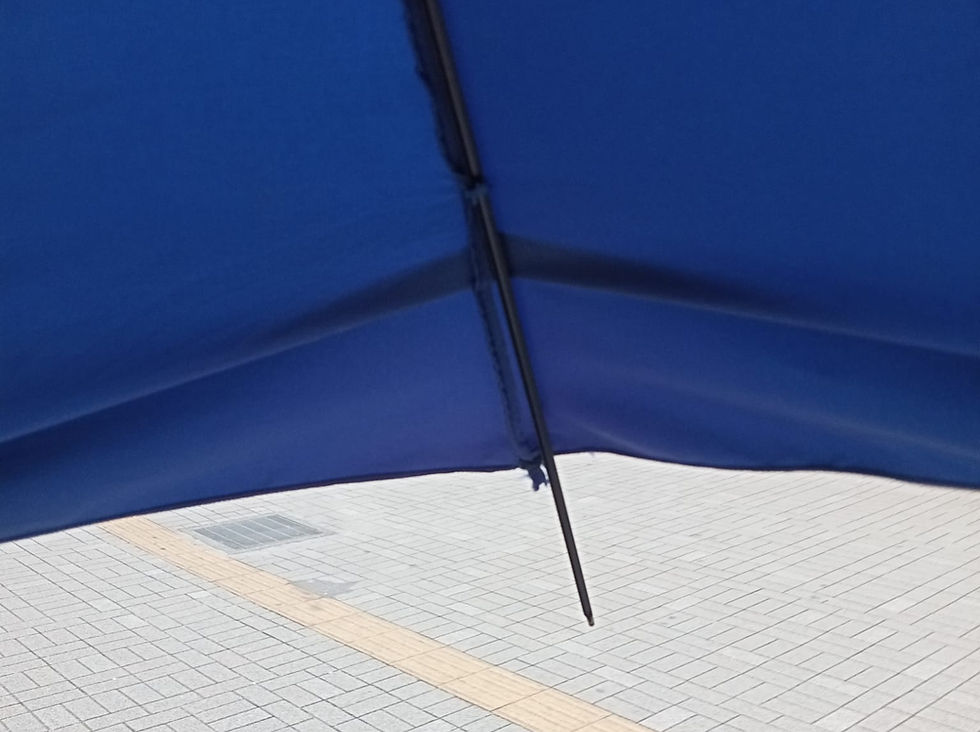
First, I discovered that there are NOT many shops in Tokyo that repair broken umbrellas, although shoe repair shops are fairly common. I couldn’t find a single umbrella repair shop in my neighborhood.
Eventually, I found one four train stops away from my nearest station.
I went there and asked the umbrella repair specialist how much it would cost to fix the rib tip.
He said ¥2,200.
¥2,200!
I had expected it to cost around ¥1,000—and certainly less than ¥2,000—because only one small part needed repairing, and it seemed to require just a few stitches.
I hesitated.
Was it worth paying more than the umbrella’s original price to repair such an old item?
My gut feeling said yes.
It didn’t make economic sense, but I still wanted to use the umbrella with all its rib tips properly covered. In the end, I decided to pay ¥2,200 to have it repaired.
The specialist then told me that he didn’t have the exact part that fit my umbrella, so he chose the one that fit it best.
The replacement tip was not perfectly straight, but I told him that was fine as long as the rib was covered.
This is the original tip:

And this is the repaired tip:

It doesn’t look exactly like the original, but the rib is covered.
The specialist explained that the replacement part was not a perfect fit. He added that if too much pressure was placed on it, it might break again fairly easily.
Nevertheless, I was happy. Why?
First, I could continue using the umbrella that I had owned and loved for many years. It doesn’t matter whether something is new or old, expensive or cheap.
When I use an item for long enough, I become attached to it. If it continues to serve me well, I want to keep using it for as long as possible.
Second, I want to live in an environmentally friendly way. I want to consume less and reduce the burden we place on the Earth. By not throwing the umbrella away and buying a new one, I can help reduce waste and carbon emissions, even if only by a small amount.
Third, I was able to support a repair business. I would like the repair industry to grow so that a culture of repairing and reusing things spreads around the world. For this to happen, repair businesses need customers who are willing to support them. I am more than happy to be one of those customers.
Mottainai
Mottainai is a Japanese word that expresses regret over wasting something valuable or useful.
For example, we might say, “Are you throwing that mug away? You can still use it. Mottainai!”
From the beginning, I felt that it would be mottainai to throw away my umbrella.
As the word mottainai suggests, Japanese culture has traditionally valued making full use of things instead of wasting them. This mindset encourages us to use our belongings for longer. Sometimes, keeping and continuing to use an old but still useful item can bring us a deep sense of fulfillment.
Conclusion
There are certainly times when we need to be practical and buying a new item makes more economic sense.
However, repairing something and using it for longer can sometimes bring us greater fulfillment. We can extend the life of an item, reduce waste, and support the people who make a living by repairing things.
So, before throwing something away, consider whether it could be repaired—especially if it is a simple everyday item, such as an umbrella, that can still perform its original function.
Repairing my old umbrella cost more than buying it did 20 years ago. Economically, it may not have made sense. Emotionally and environmentally, however, it felt completely worthwhile.
💌 Join Us for More Wisdom
Want to bring more joy, balance, and Japanese-inspired wellness into your life?
Subscribe to our newsletter for monthly insights and practical tips.


Comments