
A Healthy Japanese Meal You Can Make in One Pot: Nimono

I cook for myself even when I am busy because I believe that home-cooked food is generally healthier than eating out. It is also something my mother often told me.
Here are some benefits of eating home-cooked meals:
They may help prevent high blood pressure because you can control the amount of salt.
They may help prevent high blood sugar because you can control the amount of sugar.
They may help lower cholesterol by limiting foods that are high in saturated fat.
High blood pressure, high blood sugar, and high cholesterol can all develop without obvious symptoms.
Food from restaurants and takeaways may make us happy for a short time, but eating it too often can have a negative effect on our health.
Of course, cooking takes time and energy. That is why home cooking needs to be simple.
The dishes I cook are usually quick and easy. I have one recommendation that is simple, nutritious, and, best of all, delicious.
It is called nimono (煮物).
What Is Nimono?
Nimono is a traditional Japanese dish in which vegetables are gently simmered in a seasoned broth. You can add fish or meat, but they are not essential. You can also use tofu or fish cakes, although these are optional as well.
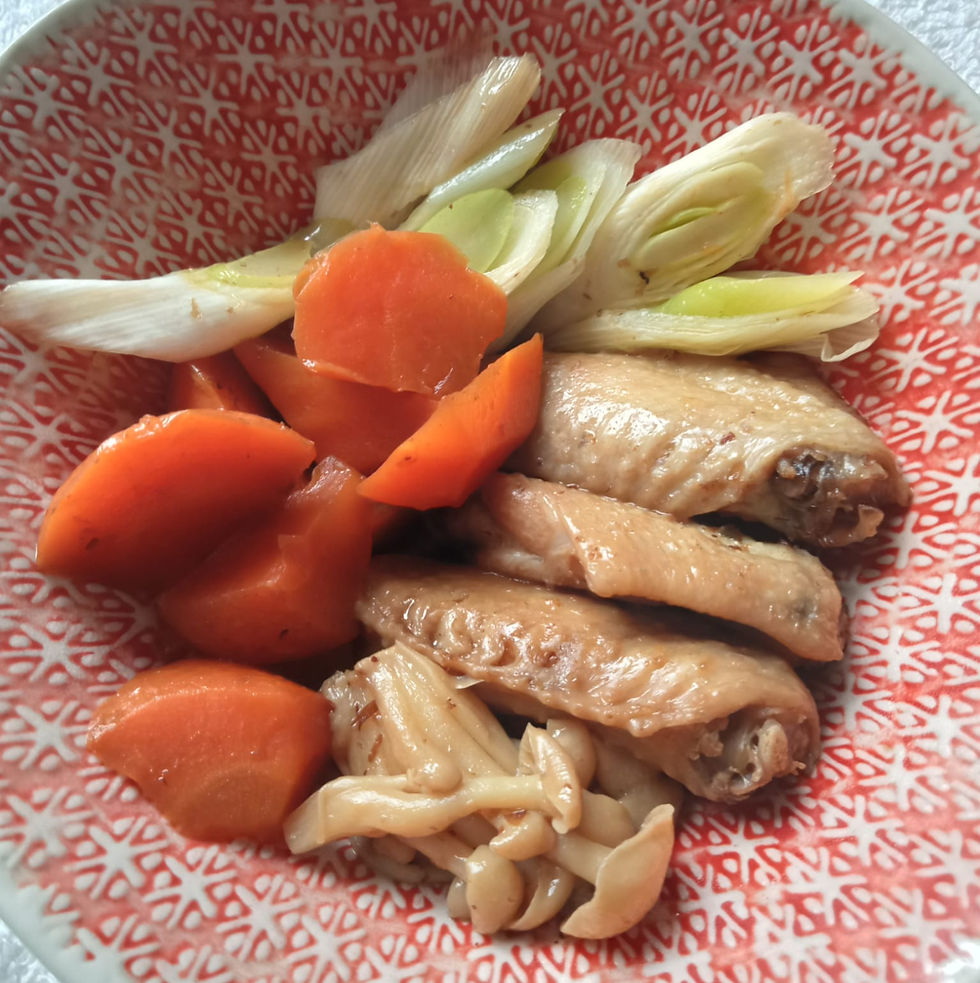
An Easy Way to Cook A Home Meal
Nimono is very easy to prepare.
Simply put vegetables and meat or fish into a pot and simmer them with a little sugar and soy sauce. That is the basic idea.
You can also add dashi if you have it, but it is not essential.
Here are some tips for making nimono even more delicious.
Use Meat or Fish with Bones For Nimono
When I make nimono with fish, I often simmer the fish with its bones and skin. When I make it with chicken, I use bone-in chicken.
This makes the dish more flavorful. The bones, skin, and other parts of the fish or meat add richness and depth to the broth.
Fish skin and the fatty parts around the head and belly may also contain DHA and EPA. These are unsaturated fatty acids found in oily fish. Simmering the fish with its skin can help you enjoy more of its flavor and nutrients.
Keep It Simple
Simplicity is important if you want to continue cooking regularly.
The basic recipe for nimono is very easy. Just cut the vegetables and simmer them with fish, meat, sugar, and soy sauce.
You can also make nimono using only vegetables.
The main seasonings are soy sauce and sugar. Ideally, you can also add mirin, sake, and dashi powder, but they are not absolutely necessary.
Dashi powder is available at many Asian supermarkets. However, you can still make nimono without it.
Add Root Vegetables First
When making nimono, put root vegetables such as carrots, daikon radish, and potatoes into the pot first.
Root vegetables take longer to soften, so starting with them helps all the ingredients finish cooking at around the same time.
Ingredients that soften quickly, such as mushrooms, leafy vegetables, and green onions, can be added later.
Add Sugar Before Soy Sauce
When the vegetables have started to soften but are not yet fully cooked, add the sugar.
Let the ingredients simmer for a few minutes, and then add the soy sauce.
The order matters because sugar takes longer to penetrate the ingredients.
Adding soy sauce later also helps prevent the outside of the vegetables from becoming too salty before the inside has absorbed the sweetness.
Do Not Make the Flavor Too Strong
Avoid adding too much sugar or soy sauce.
Using too much can make the flavor overly strong, and it may also increase your intake of sugar and salt.
Start with a small amount, taste the broth, and add more only when necessary.
You can even make a very lightly seasoned version and enjoy the natural flavor of the vegetables, fish, or meat.
Nimono is delicious and can provide a balanced combination of vegetables and protein. You can also make a large batch and keep it in the refrigerator for a few days.
Conclusion
Cooking at home allows you to control the amount of salt, sugar, and saturated fat in your meals.
Nimono is a traditional Japanese home-cooked dish that is nutritious and easy to prepare.
When making nimono, consider using whole fish or bone-in meat to add more flavor to the broth.
💌 Join Us for More Wisdom
Want to bring more joy, balance, and Japanese-inspired wellness into your life?
Subscribe to our newsletter for monthly insights and practical tips.



Comments